How Mediterranean Lifestyle Supports a Longer, Healthier Life
Longevity has moved from a niche interest to a mainstream priority. Wellness choices are no longer only about looking good or feeling energized for the week ahead. They are about staying healthy for decades. Research supports this shift.
McKinsey reports that 60% of consumers see longevity-focused health services as extremely important, while 70% are spending more in this space. The pandemic pushed many people to rethink daily habits, and longer life expectancy has added urgency. According to the World Health Organization, adults over 60 will make up 22% of the global population by 2050.
Living longer, however, does not always mean living better. Even in countries with strong healthcare systems, many adults spend a large portion of later life managing chronic disease. In some regions, more than 20 years are lived with limited physical or cognitive health.
As a result, the conversation has shifted toward extending health span, not just lifespan.
A Return to Simple, Proven Habits
As wellness trends lean into advanced testing, supplements, and digital tools, medical experts continue to point toward something far less complex. The Mediterranean lifestyle stands out because it combines daily habits that support the body over time, without relying on constant intervention.
Dr. Mariel Silva, medical director at SHA Wellness, explains that many people arrive looking for highly technical solutions.
“Biomarkers, advanced tests, supplementation, or metabolic optimization can be helpful. What often surprises people is that the most effective daily practices are much simpler. Stable sleep-wake cycles, real food, natural movement, quality rest, and meaningful human connection form the foundation of the Mediterranean lifestyle.”
These habits work together, rather than in isolation, making them easier to sustain.
The Mediterranean Diet and Long-Term Health
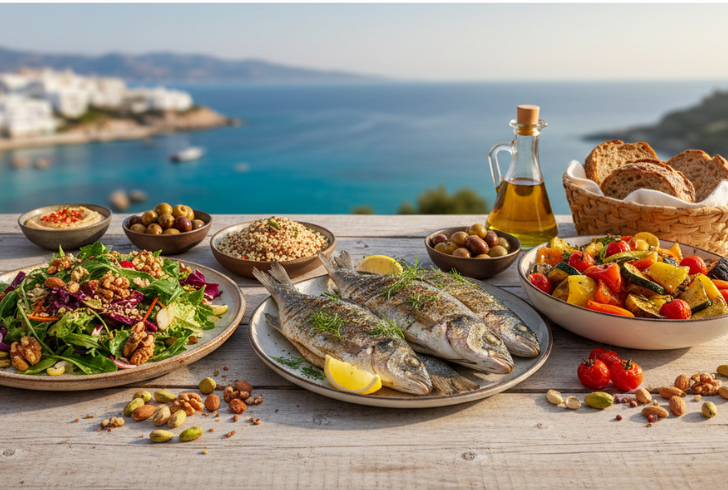
Gemini AI | The Mediterranean diet supports heart, brain, and overall health through balanced, wholesome foods.
Few eating patterns have been examined as extensively as the Mediterranean diet. According to Carlos Gutiérrez, clinical director at ZEM Wellness Clinic Altea, decades of research continue to point in the same direction. The diet is associated with lower cardiovascular risk, reduced incidence of type 2 diabetes and metabolic syndrome, decreased inflammation, and improved cholesterol profiles. These benefits also correlate with increased longevity and reduced cognitive decline.
At its core, the diet focuses on:
- Vegetables and fruits eaten daily
- Fiber-rich foods such as legumes and nuts
- Fish as a primary protein source
- Olive oil as the main dietary fat
Clinicians stress flexibility over restriction. Many of the benefits come from steadier energy levels, improved digestive function, and access to a wide range of micronutrients. Over time, this approach supports metabolic stability and reduces physiological strain.
Eating as a Daily Ritual
What people eat matters, but how meals are approached matters just as much. Mediterranean cultures tend to value shared meals, slower eating, and awareness of taste and satiety. This mindful style supports digestion, prevents overeating, and reinforces social bonds.
These rhythms extend beyond the table. Dr. Silva advises regular short breaks, time spent outdoors, and alignment with natural daylight. Together, these habits support emotional regulation, improve sleep quality, and help maintain steady energy throughout the day.
The Science Behind the Siesta
Short daytime naps are often associated with Mediterranean lifestyles. Research suggests that when naps are brief, they may offer cardiovascular benefits. Studies from Greece have linked regular short naps with reduced heart-related mortality, likely due to improved hormonal regulation.
Katherine Lozano, an integrative medicine specialist at Palasiet, explains that naps under 30 minutes can reduce stress, sharpen cognitive performance, and improve alertness. These effects align with lower oxidative stress and improved mitochondrial function, both of which play a role in aging. Longer naps, on the other hand, tend to cancel out these benefits.
Daily Sunlight and Outdoor Time

Freepik | Spending time outdoors each day boosts energy, supports sleep, and keeps the mind sharp.
Spending time outdoors plays a steady role in healthy aging. Morning light strongly influences the body’s internal clock, affecting cortisol levels, melatonin production, sleep quality, inflammation, and metabolic function.
Francisco Gómez, a specialist in Psycho Neuro Immuno Endocrinology, explains that light exposure does not need to be lengthy to be effective. Just five to ten minutes of natural light shortly after waking—on a balcony or near an open window—can help recalibrate circadian rhythms and signal the body that the day has begun.
Time spent outdoors tends to create a cascade of secondary benefits. Gentle movement becomes more likely, casual social interaction increases, and mental overstimulation eases.
Social Bonds as a Health Factor
Strong social networks remain a defining feature of Mediterranean longevity. Chronic stress accelerates biological aging by shortening telomeres, while consistent social connection helps counteract this effect.
Lourdes Ramón, psychologist at Palasiet, explains the physiological effects of connection.
“Social interaction increases oxytocin, dopamine, and endorphins, which lowers cortisol and strengthens emotional resilience. At the immune level, it reduces chronic inflammation and stress-driven immune responses. Human connection acts as a biological nutrient.”
These responses protect physical health while supporting mental resilience.
The Mediterranean lifestyle continues to stand out because it integrates daily behavior with the body’s natural rhythms. Balanced nutrition, consistent movement, restorative rest, social connection, and daylight exposure function as a system. Research increasingly reinforces a simple truth these cultures have lived by for generations: health is sustained through repetition, balance, and connection.