The Truth Behind “The Cartel Olympics” Story and Its Controversy
Stories about organized crime often travel fast, especially when they mix danger, survival, and powerful enemies. One such story gained attention after claims surfaced about a secret sports competition organized by Mexican cartels—an event where kidnapped athletes allegedly competed for their lives.
The story sounded like a plot from a crime drama, complete with brutal training camps, cartel bosses placing bets, and prisoners fighting to survive on a football field.
The tale quickly drew interest from journalists, filmmakers, and even Hollywood actors. A movie project titled “The Cartel Olympics” began circulating among producers, with actor Michael Peña reportedly interested in portraying the central figure. Yet as reporting progressed, the dramatic narrative began to crumble. Investigations uncovered contradictions, fabricated credentials, and a history of fraud tied to the man who told the story.
The episode reveals more than just a fabricated crime saga. It highlights how compelling narratives can spread quickly when they align with public perceptions about crime, corruption, and cartel power in Mexico.
The Kidnapping Story That Sparked Interest
The narrative centered on Mauricio Morales, often referred to as Mau. According to his account, the ordeal began on February 9, 2023, in Mexico City. Morales claimed he had been helping migrants reach a refugee camp when five identical white vans suddenly blocked the street in the San Rafael neighborhood.
Men wearing tactical gear reportedly rushed out of the vehicles carrying machine guns. Witnesses were ordered to climb into the vans immediately. Morales said he resisted, which led to a blow to the head that left him unconscious.
When consciousness returned, he described waking inside a windowless room equipped with only a mattress and a bucket. Personal belongings, including his wallet and phone, had disappeared. Over the following days, he claimed that guards beat and tortured him. Broken ribs, fingernails pulled out, and constant intimidation became part of the story he told.
Several days later, according to Morales, the tone of his captors suddenly changed. He was taken to another location where a cartel leader introduced himself as Don Paco, a figure allegedly tied to the Mexico City cartel La Unión Tepito.

Instagram | theatlantic | The cartel reportedly realized they had kidnapped a three-time Olympian after spotting his iconic rings tattoo.
Don Paco reportedly told Morales that his Olympic rings tattoo had drawn attention. After researching his background, cartel members supposedly discovered they had kidnapped an Olympic runner who had competed in multiple Games, including Beijing 2008 Summer Olympics, London 2012 Summer Olympics, and Rio 2016 Summer Olympics.
The cartel boss allegedly offered Morales a shocking proposal.
If he coached and played for the cartel’s flag-football team in an underground tournament, he could earn his freedom. Losing meant death.
The stakes, according to Morales, were clear: “If you win, you live. If you lose, you die.”
The Alleged Tournament Run by Cartels
Morales described the tournament as a secret gathering organized by several major criminal groups. Cartel bosses, politicians, celebrities, and journalists supposedly attended the event as spectators.
The competition reportedly featured multiple sports, including soccer, boxing, frontón, a handball-style sport and tochito, a form of American flag football popular in Mexico.
Prisoners allegedly trained every day in a facility resembling a school compound. Armed guards patrolled the area while music from narcocorridos played across loudspeakers.
Morales claimed the training routine included running laps, lifting weights using concrete blocks, and practicing game strategies for hours each day. Teams represented different cartels and competed in violent matches where referees ignored illegal tackles and assaults.
During the tournament, losing teams allegedly faced execution.
Morales said his team, representing La Unión Tepito, advanced through several brutal games. Rival players kicked, punched, and gouged opponents while crowds cheered. He described hearing gunshots after each match as defeated teams disappeared behind the gymnasium.
According to his version of events, the final match occurred against the Tláhuac cartel team. The game ended in overtime when Morales caught a touchdown pass, winning the championship.
He said guards then placed a gold-colored medal around his neck before dumping him on a street at dawn, bruised and barefoot.
Hollywood Interest and the Film Project
The story might have remained a private account if it had not reached the entertainment industry.
A Las Vegas lawyer and talent manager named Robert Reynolds heard about Morales through contacts connected to the United Nations refugee community. Reynolds believed the story had major cinematic potential.
He began developing a film project titled “The Cartel Olympics.”
Interest in Hollywood grew rapidly, with actor Michael Peña reportedly expressing enthusiasm about portraying Morales in the proposed film. The project attracted significant attention because the narrative included all the hallmarks of a dramatic thriller: a kidnapped athlete, organized crime leaders, a survival competition, political corruption, and a compelling redemption arc.
Yet before committing to the film, producers wanted verification. A journalist was asked to investigate Morales’s claims and confirm whether the events truly happened.
That request launched an extensive investigation.
Early Signs That Something Was Wrong
Initial interviews with Morales created the impression of a sincere survivor. He spoke quietly and answered questions without dramatic exaggeration. He also provided references who supposedly could confirm parts of his story.
One of the most influential sources was James Winston, a London-based investigator who claimed to work with UN Refugee Agency and refugee support programs connected to R4V, an international coordination platform for migrants.
Winston defended Morales strongly. Messages described cartel violence in Mexico as deeply misunderstood by outsiders.
However, verification soon revealed troubling problems.
The Colombian Olympic Committee confirmed that no athlete named Mauricio Morales had competed for their national team. Morales then changed his story, claiming he had represented Mexico instead.
Officials from the Mexican Olympic Committee also reported having no record of him as a competing athlete.
The supposed Olympic accreditation Morales provided turned out to be a guest credential, typically issued to visitors rather than competitors.
Social media posts added further confusion.
Morales’s Instagram account contained photos with famous figures such as Mike Tyson, Lionel Messi, and Kofi Annan. Many images appeared edited or fabricated, including an Olympic race photo that actually depicted Italian runner Pietro Arese competing in Paris 2024 Summer Olympics.
The Mysterious Sources Who Didn’t Exist
As the investigation continued, the credibility of Morales’s supporting witnesses also collapsed.
Repeated attempts to speak with James Winston by phone failed. Emails arrived from supposed colleagues at humanitarian organizations, but requests for direct interviews were avoided.
Independent searches revealed that the organizations mentioned in those emails had inactive or incomplete websites. Several institutions that Winston claimed to represent—including London School of Economics—confirmed that they had no record of his employment.
The LinkedIn profile for James Winston appeared only recently and contained vague employment history.
Evidence strongly suggested the identity might have been fabricated.
A Meeting With a Former “Cartel Teammate”
Despite mounting doubts, one piece of testimony kept the story alive.
Morales introduced investigators to a man known as Mamers, who claimed to have been a cartel hitman and Morales’s teammate during the tournament.
Mamers described events that closely matched Morales’s narrative. He spoke about the training facility, violent matches, and the unusual gathering of cartel leaders and political figures.
The account seemed detailed and consistent.
Mamers said the experience had changed his life. After witnessing Morales’s suffering, he decided to leave cartel activity and begin working in construction.
Yet even this testimony raised questions. Later investigations revealed that Mamers, whose real name was Edgar Omar González Giffard, had been incarcerated at the same prison as Morales.
The Discovery That Changed Everything
A key discovery emerged from court records connected to a fraud case.
Documents revealed that a man named Mauricio Morales Bermúdez had been arrested for financial fraud on February 9, 2023—the exact day Morales claimed he had been kidnapped by cartel members.
The case involved allegations of a large financial scam tied to the Non‑Violence Project Foundation, a Swiss nonprofit associated with global anti-violence campaigns.
According to legal filings, Morales operated a Mexican branch connected to the organization and allegedly convinced a labor union leader named Alejandro Martínez to invest large sums of money.
The pitch involved promises of exclusive events, celebrity encounters, and a financial return of 50 percent.
Emails appearing to come from Yoko Ono helped persuade investors. Investigators later concluded that the emails and signatures were likely forged.
Martínez ultimately transferred about $700,000 to accounts controlled by Morales. The promised returns never appeared.
Authorities arrested Morales in connection with the fraud investigation and placed him in Reclusorio Sur, a prison in Mexico City. Records showed he spent approximately 18 months in custody awaiting trial.
What Actually Happened in Prison
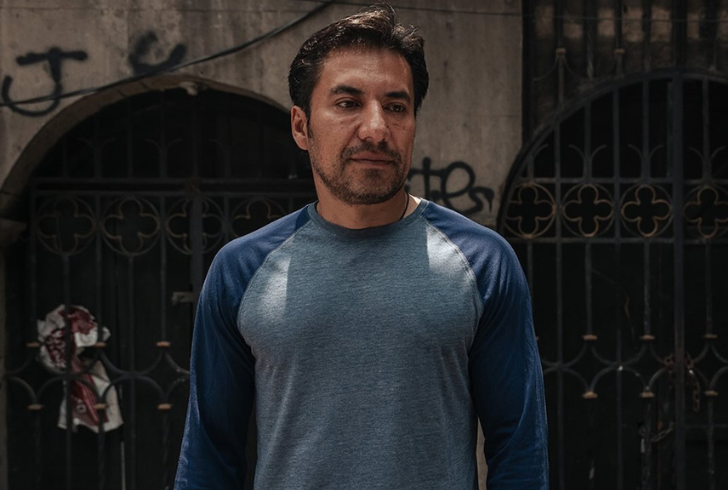
Instagram | theatlantic | The Mauricio Morales saga proves that a compelling narrative often shapes public belief far faster than actual evidence.
Inside Reclusorio Sur, Morales shared a cell block with Edgar Omar González Giffard—the same man later introduced as Mamers.
Mexican prisons often organize sports competitions between inmates. Officials confirmed that the penitentiary system hosts football tournaments and other athletic events.
This discovery suggested a possible explanation.
Instead of a deadly cartel competition in a remote compound, Morales may have participated in ordinary prison sports activities. Over time, those experiences may have evolved into a dramatic survival story.
Whether this transformation happened intentionally or gradually remains uncertain.
The Role of Mexico’s Cartel Reputation
The story spread quickly because it fit existing perceptions about organized crime in Mexico.
Cartels such as the Sinaloa Cartel and Jalisco New Generation Cartel have long dominated international headlines. Violence, corruption, and missing persons cases remain serious issues across the country.
More than 130,000 people are officially listed as missing in Mexico, according to government records.
Public anxiety around cartel influence made Morales’s claims feel believable. The idea that criminal groups might host secret competitions seemed extreme but not impossible to many observers.
That environment allowed the story to gain traction before verification.
Once the investigation exposed the inconsistencies and legal records, the film project based on Morales’s account appeared to collapse. Yet the unusual twist is that the project did not disappear completely.
When producers learned about the deception and fraud case, they realized the real story might be even more interesting than the original narrative.
Instead of portraying a heroic survivor, the film could examine the strange chain of events surrounding the hoax itself.
The proposed movie “The Cartel Olympics” shifted focus from a fictional cartel tournament to the investigation that uncovered the truth.
Story That Reveals the Power of Belief
The saga surrounding Mauricio Morales demonstrates how compelling stories can influence perception long before evidence emerges. A dramatic tale about cartels, kidnapped athletes, and life-or-death sports competitions captured attention because it aligned with widely held assumptions about organized crime.
Investigations later revealed a different reality: a fraud case, fabricated credentials, and a prison experience that may have inspired an exaggerated narrative.
Yet the episode offers an important lesson about storytelling in the modern media environment. Dramatic claims can spread quickly when they match public fears and expectations. Verification often arrives later, after the narrative has already shaped public imagination.
Even after the facts surfaced, the story did not completely disappear. Interest from filmmakers and audiences remained strong, proving that once a gripping narrative takes hold, it rarely fades quietly.